
 What's On HK



 Eat & Drink



 Travel



 Style
Style


 Beauty


 Health & Wellness


 Home & Decor



 Lifestyle
 Weddings


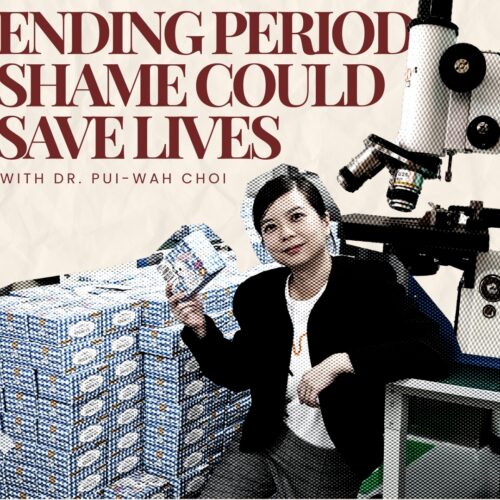
This Gynaecological Cancer Awareness Month, we talk to Dr Pui Wah Choi on why period blood isn’t a waste product, but a fluid packed with life-saving health data that can help early detection of certain types of cancer
This September, globally recognised as Gynaecological Cancer Awareness Month, brings a sobering reality into focus for women’s health in Hong Kong. According to the Hospital Authority’s most recent data, published in 2024, womb, ovarian and cervical cancers rank among the top seven most common cancers affecting women in the city. For all three, early detection can be decisive for treatment and recovery. Yet the same obstacle keeps holding us back — and it isn’t medical technology, it’s taboo. And one Hong Kong doctor has made it her life’s mission to dismantle this taboo.
Read More: Your Guide To Health Insurance In Hong Kong

Dr Pui Wah Choi’s Femtech Product PadX Makes Cancer Screening Non-Invasive
Two years back, Dr Pui Wah Choi, founder of WomenX Biotech, launched PadX, a sanitary pad-based screening test that detects human papillomavirus (HPV), the virus responsible for roughly 95% of cervical cancers, according to the WHO, with 99% accuracy. There’s no clinic visit and no pap smear required: you simply wear the pad during your period, seal it in a secure mailer and send it to the lab, with results delivered in three days. It’s a non-invasive procedure, but unfortunately there’s still a lot of stigma around it.
We sat down with Dr Choi, to understand the nuances. “We hit a wall fuelled by superstition and a mindset barrier,” she says. “For generations, women have been conditioned to hide their periods and treat sanitary pads like a dirty secret.” Some users still feel that mailing a used pad to a lab is, in her words, “disgusting” or improper, but she’s determined to change that.
“We have had to do immense work to re-educate the public, helping women see that their menstrual blood isn’t something dirty to hide, but a powerful bio-fluid packed with life-saving health data,” she says.
Read More: Your Guide To Sexual Health Centres In Hong Kong

How To Break Societal Barriers And Make Women’s Healthcare Less Daunting
This isn’t an easy fight, and screening rates in Hong Kong have stayed stubbornly low for decades. The WHO targets 70% global screening coverage; according to the Department of Health’s Population Health Survey, cited by SCMP in 2026, only 52.1% of eligible Hong Kong women aged 25 to 64 have ever had a smear test.
Dr Choi thinks part of the problem is design. “Why must taking care of our health feel so invasive, painful and intimidating?” she asks, referring to the speculum, still the standard instrument for pap smears. “While humanity has conquered space, developed targeted cancer therapies and invented AI, the speculum has remained virtually unchanged for over two centuries.”
She has watched delayed screening turn fatal, both in her own family and among women close to her, which is exactly why she frames this as more than a medical problem. “Early disease detection isn’t just a medical hurdle. It’s a human-centric design challenge. Healthcare needs to feel like an open, welcoming door rather than a clinical ordeal.”
Read More: Her Male Doctor Dismissed It As A UTI — It Turned Out To Be Cancer

From Fear Of ‘Bad Luck’ To Clear Roadmap For Success
PadX was engineered to be exactly that. But Dr Choi has learnt that building the technology was the easier half of the battle. Resistance began before PadX ever reached a single user, on the factory floor.
“We hit a manufacturing wall fuelled by superstition,” she recalls. In Chinese society, menstruation carries heavy stigma and male factory workers initially “flatly refused to participate”, fearing handling sanitary pads would bring “bad luck”. Getting PadX made at all meant pushing through this generational bias head-on, but she did it.
Once PadX reached users, a second, more intimate barrier surfaced: shame. The clinical data already showed that PadX was effective, but the question that faced Dr Choi was how to move it from a smart innovation to a universally accepted standard of care, and she has a clear roadmap for getting there.
Read More: 7 Ways To Get Started On Your Sexual Wellness Journey

Screening For Cancer Using Period Blood Needs To Be Seen As The Norm
The first shift is conceptual: reframing menstrual blood as a diagnostic asset rather than waste. “Proving that it can be used to detect life-threatening diseases changes how society values it,” she says. The second is behavioural — making screening as unremarkable as wearing a pad. “By integrating health screenings into a familiar, everyday item like a sanitary pad, we strip away the anxiety and shame. When a test is as simple as wearing a pad for four hours and mailing it to a lab, the topic naturally becomes normalised.”
Silence, she argues, is stigma’s greatest ally — and everyone has a responsibility to break it. “We need platforms like Sassy, educational systems and healthcare providers to speak about menstrual health openly and without euphemisms. Open conversation is the ultimate antidote to silence and shame.”
Beyond the cultural shift, she stresses that trust is earned through transparency. “Whenever users get a positive result, we provide transparent and thorough information about the indication of the results and the possible next step” — whether that means connecting them to NGOs, government health services or private clinics. “We are actively working to align our innovation with government policymakers, medical networks and insurance providers so that PadX becomes an accessible, affordable and standard option for every woman, everywhere.”
Read More: Essential Health Check-Ups Every Woman Should Schedule
The Science Is Ready, We Need To Be Ready To Adopt It
This Gynaecological Cancer Awareness Month, Hong Kong’s own health data makes the stakes plain: ovarian, cervical and womb cancers remain among the most common cancers affecting women in the city — but since the tools to catch at least some of them early already exist, we need to adopt them, and fast.
“No stigma or taboo shall block us from saving lives with new innovation,” Dr Choi insists. Two years into PadX’s journey in Hong Kong, this sentiment feels both like the doctor’s mission statement and an open invitation to every woman to be empowered to talk about her own body.