
 What's On HK




 Eat & Drink


 Travel



 Style




 Beauty

 Health & Wellness
 Home & Decor




 Lifestyle

 Weddings


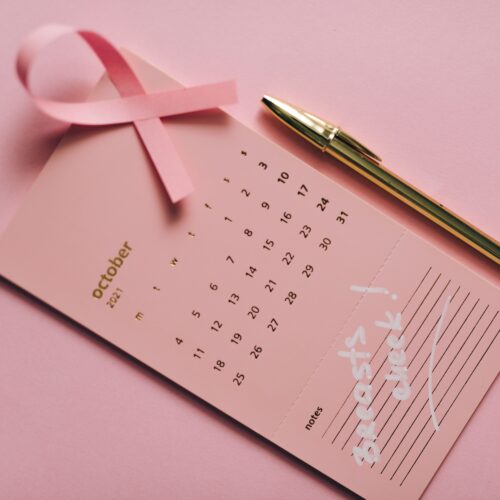
October is Breast Cancer Awareness Month. The best way to prevent a devastating diagnosis is early detection, so learn how to check yourself and get to know what “normal” feels like to you and your body…
October is Breast Cancer Awareness month — and while we’re surrounded by pink advertising, pinkathons, pink afternoon tea-sets, and pink discount deals, health and awareness still take top priority. It’s never easy to acknowledge the impact of the “C” word, but according to the Centre for Health Protection, breast cancer remains the most common form of cancer among women in Hong Kong.
The only way to make sure you and your breasts are fine and dandy is early detection. We’re not talking annual mammograms, but about about feeling your boobs on a monthly basis — knowing what’s your normal and what’s not, so that every soreness, dimple, discharge or twinge sends a clear signal to the brain. Before we school you in breast self-examination, let’s lay down the basics.
Read More: Egg Freezing In Hong Kong — Everything You Need To Know
Editor’s Note: Self-exams don’t replace regular screening, so always consult your doctor. You can ask about a clinical breast exam (CBE), which the American College of Obstetricians and Gynecologists recommends every 1 to 3 years for women aged 29 to 39, and annually after age 40.
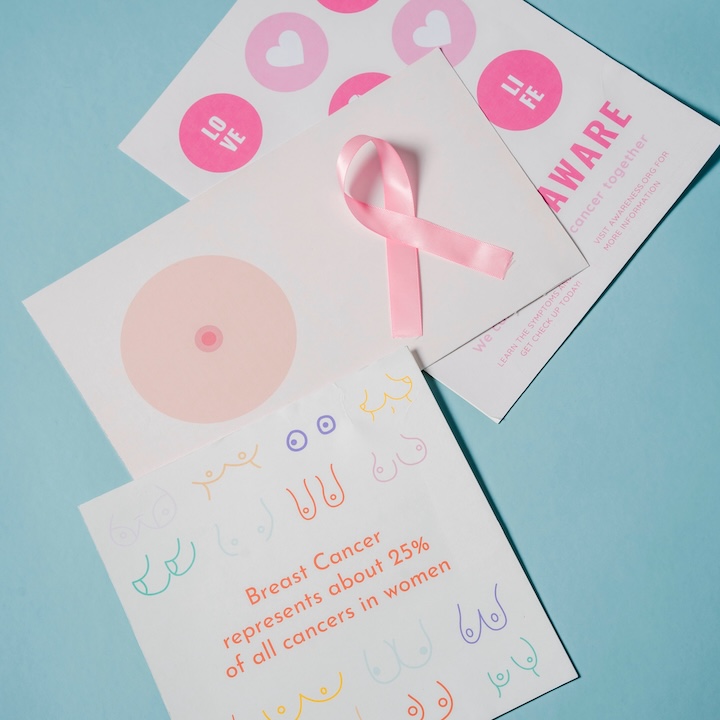
Who is at risk of developing breast cancer?
Anyone with breast tissue. That’s not just CIS women, but also men, transgender and nonbinary individuals. While the disease is vastly more common in females, male breast tissue shares structural similarities with female tissue — and according to the World Health Organization (WHO), approximately 0.5% to 1% of all global breast cancer cases occur in men.
Another common breast cancer myth is that the disease is all down to genetics. In reality, the WHO states that roughly 85% of the people who get breast cancer don’t have any family history of the disease. While carrying BRCA1 and BRCA2 genes definitely raises your breast cancer risk significantly, they are not the sole factor. Ultimately, a diagnosis is tied to a mix of age, reproductive history, estrogen and progesterone exposure, alcohol consumption, body weight, physical activity levels and environmental exposures.
What changes should I watch out for?
Breasts are lumpy. When I first started doing the monthly exams, I would live in constant fear of being a living ball of tumours. But after a couple of months, you get the hang of what’s your normal, what your boobs look and feel like at a certain point in your menstrual cycle. AKA, when something’s off, you know to alert your doctor.
When to do a breast self-examination?
For menstruating women, the best time for a self-exam is the fourth or the fifth day of your cycle, when the pre-period breast thickening has subsided and there isn’t any unusual breast tenderness. The general rule of thumb is to check your breasts for irregularities at the same time every month.
Signs to look out for:
- Any hard, irregular blob which does not move with your fingers or the rest of the breast tissue.
- Any lumpy/bumpy swelling or dimpling, even changes in the texture of your boob or towards the armpit.
- Changes in shape or size of one boob.
- Nipple discharge when you’re not pregnant or way past breastfeeding.
- Swollen lymph nodes in the armpit or around the neck bone.
- Thickening of the areola, any redness or scaliness in this area.
If something does strike a nerve, don’t go into panic mode, keep calm and know that most lumps are harmless tumours, but consult your doctor for further tests.
Read More: A Non-Binary Hong Konger Talks Top Surgery & Trans Joy
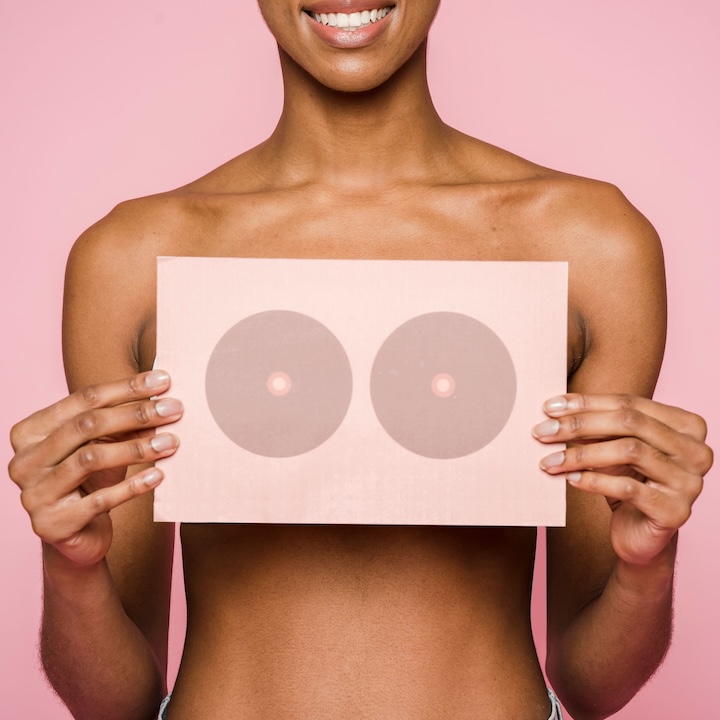
How To Perform A Breast Exam On Yourself Correctly
1. Lie down on your back on the bed or stand and put your hand above the head. Use the index, middle and ring finger of the other hand to begin the exam.
2. Mentally divide the breast into four quadrants and then start by pressing your fingers firmly into the armpit using circular motions while coming towards the nipple.
3. Check one part of the breast at a time and then work your way around the entire boob.
4. Repeat the process on both the breasts.
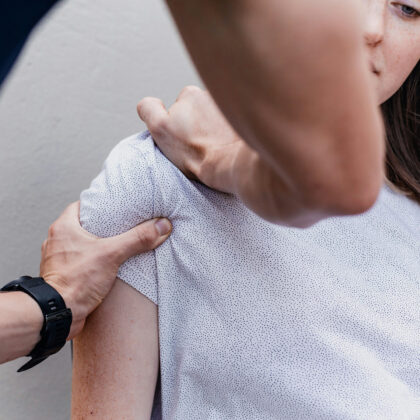
5. Check firmly under your armpits for any swollen lymph nodes – they’ll feel like peas under your skin.
6. Squeeze the nipples to see if there is any abnormal discharge. By abnormal discharge, we mean any discharge or blood.
7. Stand in front of the mirror and observe the shape, size and texture of your breasts. Is there a change? Anything suspicious like bumps, rashes or retracted nipples which don’t look normal, should be reported to the doctor straight away.
That’s it! Keep a close watch on your twins and stay healthy!
Read More: Your Guide To Sexual Health Centres In Hong Kong
This post was originally published in October 2018 by Nikita Mishra.
Main image courtesy of Leeloo The First, second image courtesy of Klaus Nielsen, third image courtesy of Thirdman, all via Pexels